
Last updated:

- Typical Repair
- 1 - 3 days on site
- Warranty
- 2-year workmanship warranty
- Photo Review
- Free with repair quote
Common Issues We Fix
Rotten Boards
Soft spots, cupped boards, end-grain rot around fasteners. We remove the affected boards, dry out the joists if needed, and install fresh lumber or composite.
Loose Rails
Railing posts that wobble under load are a serious safety issue. We re-anchor with through-bolted hardware and add blocking as needed to meet the 200-lb concentrated load rule.
Damaged Posts
Base rot from post-in-dirt installs, cracked corners from impact, or insect damage. We replace with pressure-treated or steel posts on proper concrete footings.
Soft Joists
Rot from water trapped against the ledger or between boards. We sister new joists, replace the ledger if needed, and re-flash the house-to-deck connection.
Popped Nails & Screws
The classic older-deck hazard. We pull every popped fastener, fill the hole with an oversized structural screw, and sweep the deck with a magnet to catch loose ones.
Wobbly Stairs
Stair stringers that flex under foot, missing middle stringers on wide runs, or loose connection at the deck rim. We re-anchor, add stringers, and re-shim as needed.
Safety & Code Check
Every repair starts with a code check, first from your photos and again when the crew is on the job. We flag any code-compliance issue so you know what is safe, what needs a repair, and what can wait.
Rails & Guards
- 36-inch minimum rail height on residential decks
- 42-inch rail required (or recommended) on any deck 30+ inches off grade
- 4-inch sphere rule - no opening in the guard can pass a 4-inch sphere
- Graspable stair handrail between 34 and 38 inches above the nosing
- Posts resist a 200-lb concentrated load in any direction
Structure & Hardware
- Ledger bolted to house with lag screws or through-bolts - not just nails
- Z-flashing or membrane behind the ledger to keep water out of the rim joist
- Posts sit on concrete footings below frost line, not buried in dirt
- Joist hangers are stainless or galvanized, not lightweight zinc
- No visible rot, insect damage, or splitting in structural members
Repair or Rebuild?
Our rule of thumb: if more than 30 percent of the structural framing is damaged, rebuilding is usually cheaper than repairing. Patch repairs on a rotten frame tend to chain - one bad joist leads to the next, and labor to open up and reclose decking adds up fast.
Repair makes sense when
- + Fewer than 5 boards need replacement
- + Framing is solid, just needs fasteners or flashing
- + One rail section is loose, rest are solid
- + Stairs need re-anchoring, not replacement
- + Deck is under 10 years old
Rebuild is the right call when
- - 30% or more of joists show rot
- - Ledger board has failed or was never flashed
- - Posts are buried in dirt with base rot
- - Rail system is universally out of code
- - Deck is 20+ years old with original fasteners
We tell you which way the math points - in writing - before we touch a tool.
What Every Repair Includes
- Free photo review before you hire us
- Written scope with photos of each issue
- Pressure-treated replacement lumber (or composite match)
- Stainless or galvanized hardware upgrades
- Permit (if scope requires one)
- Magnet-sweep for dropped fasteners
- Debris haul-away
- 2-year workmanship warranty on all repair work
What this work looks like
An illustrated before and after. These are not photos of one of our jobs; we will add our own photos as projects finish.
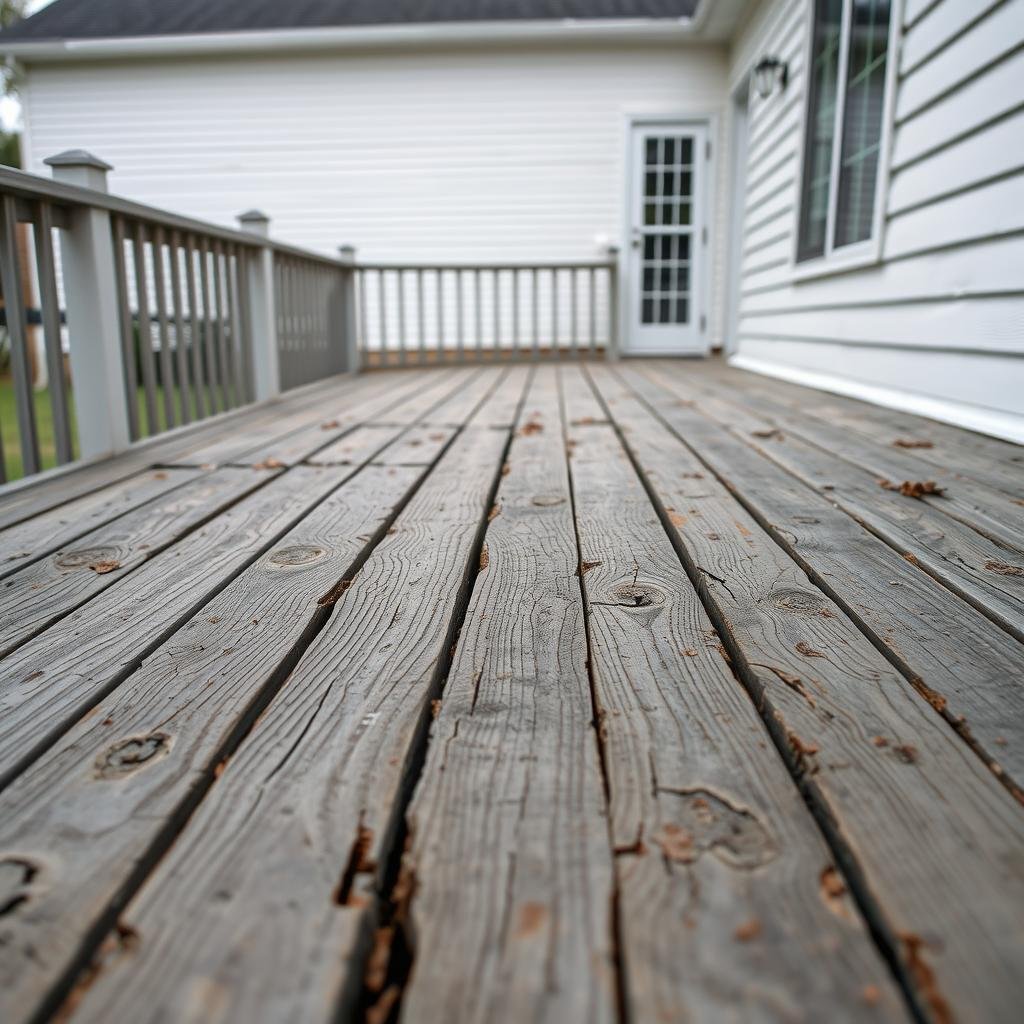
Before: Rotted boards and loose hardware
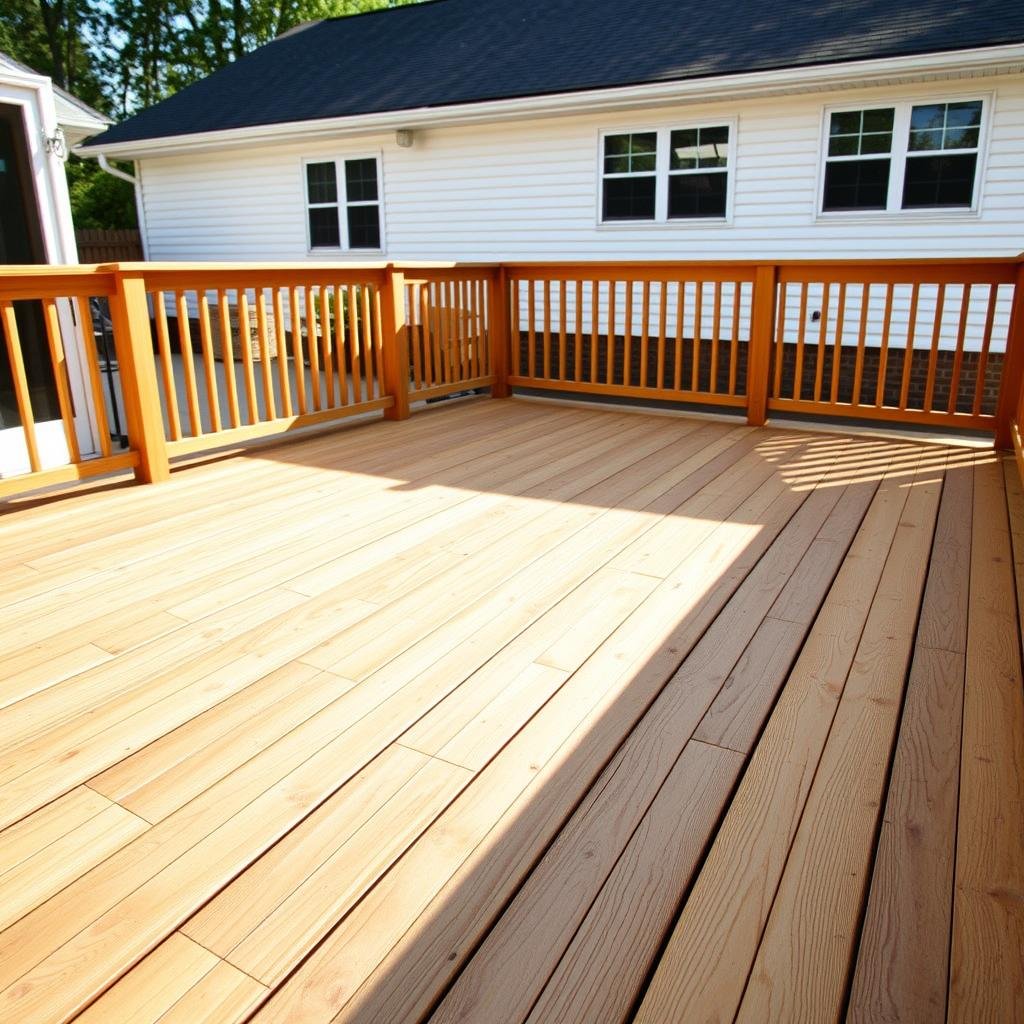
After: Safe, code-compliant deck back in service
Sample Repair Scopes & Costs
Rough math at $20/sqft of repair area, plus hardware upgrades as needed.
Minor
5 board swap + rail re-anchor
~40 sqft repair, same-day completion
$800
From ~$800
Mid-Size
Partial joist replacement + 15 boards
~120 sqft repair, 1-2 days on site
$2,400
From ~$2,400
Full Resurface
All new boards on existing frame
~320 sqft, 2-3 days on site
$6,400
From ~$6,400
Our Repair Process
Send Photos
Free. Send photos plus the deck size and height. We walk you through it, flag code issues, and scope the repair.
Written Quote
You get a line-item quote with photos so there are no surprises on what we are fixing and what it costs.
Repair
Most repairs close out in 1 to 3 days on site. Structural work may require a permit and an inspection.
Hand Off
Magnet-sweep, cleanup, and walk-through. Balance due via credit card, Zelle, Venmo, or cash.
Warranty
Repair work carries a 2-year workmanship warranty - matching our standard 2-year new-build warranty. If our repair fails because of how we did the work, we come back and fix it within that window at no charge.
New lumber and hardware we install carry their own manufacturer warranties, which we register to you at close-out.
Frequently Asked
When does it make sense to rebuild instead of repair?
Our rule of thumb: if more than about 30 percent of the structural framing (joists, beams, ledger, or posts) is damaged, rebuilding usually costs less than repairing. Patch repairs on a bad frame tend to chain - one rotten joist leads to two, then four, and labor to open up and reclose decking ends up exceeding the cost of a fresh build. We will tell you honestly after we review your photos which direction makes sense.
Is my older deck still up to code?
Not necessarily. Residential deck code has tightened significantly in the last 15 years - rail heights went up, baluster gap got smaller, ledger fastening became much stricter, and post-to-beam connections now require specific hardware. A 2005 deck that was fine then can be flagged today. Our code check flags what is out of spec so you know what actually needs attention versus what is cosmetic.
What are the current NC and SC residential rail requirements?
For decks more than 30 inches above grade, residential rail height must be at least 36 inches (we install at 42 inches as a safer default). Balusters must be spaced so a 4-inch sphere cannot pass through. For stairs, the graspable handrail sits at 34 to 38 inches above the nosing. Our code check covers each of these and flags anything out of spec.
Do you need a permit to replace boards?
Cosmetic board-for-board replacement usually does not require a permit because the structural frame is unchanged. Any structural repair - joist replacement, ledger re-flashing, post replacement, or rail rebuild - typically does require a permit because those elements are load-bearing. We pull the permit on any scope that requires it.
Can you match the stain on my existing deck?
For pressure-treated decks, usually yes - we can order the same manufacturer and tone and blend new boards into the existing field. There will be a visible color difference for the first year while the new boards weather in, then the match tightens up. For composite decks, we match the manufacturer, line, and color code; composite color stays stable so the match is usually instant.
Our Deck Services
Deck repair, new builds in pressure-treated or Trex composite, staining, and frameless glass railings across south Charlotte and northern York County, SC.
- Deck Repair & Board Replacement You are here
- Free Deck Photo Review
- Pressure-Treated Wood Decks
- Trex Composite Decking
- Premium Composite Decks (Trex Transcend)
- Deck Staining & Sealing
- Glass Railings for Decks
- Fence Repair
Cities We Serve
Towns in Union and Mecklenburg County, NC and York and Lancaster County, SC, served from our base in Waxhaw, NC (28173). If you do not see yours, call us - we may still be able to help.
- Marvin, NC Union County
- Waxhaw, NC Union County
- Weddington, NC Union County
- Stallings, NC Union County
- Matthews, NC Mecklenburg County
- Ballantyne, NC Mecklenburg County
- Fort Mill, SC York County
- Indian Trail, NC Union County
- Indian Land, SC Lancaster County
- South Charlotte, NC Mecklenburg County
- Tega Cay, SC York County
- Providence, NC Mecklenburg County
- Pineville, NC Mecklenburg County
- Monroe, NC Union County
- Lake Wylie, SC York County
- SouthPark, NC Mecklenburg County
- Steele Creek, NC Mecklenburg County
- Mint Hill, NC Mecklenburg County
- Myers Park, NC Mecklenburg County
- York, SC York County
- Wingate, NC Union County
- Rock Hill, SC York County
Send us a few photos of your deck
Add the deck size and height and we reply with what we see and a free written quote, usually within 2 hours during business hours.